
2026-10-11 ·
When to Repair vs. Replace Your HVAC System in Waxahachie
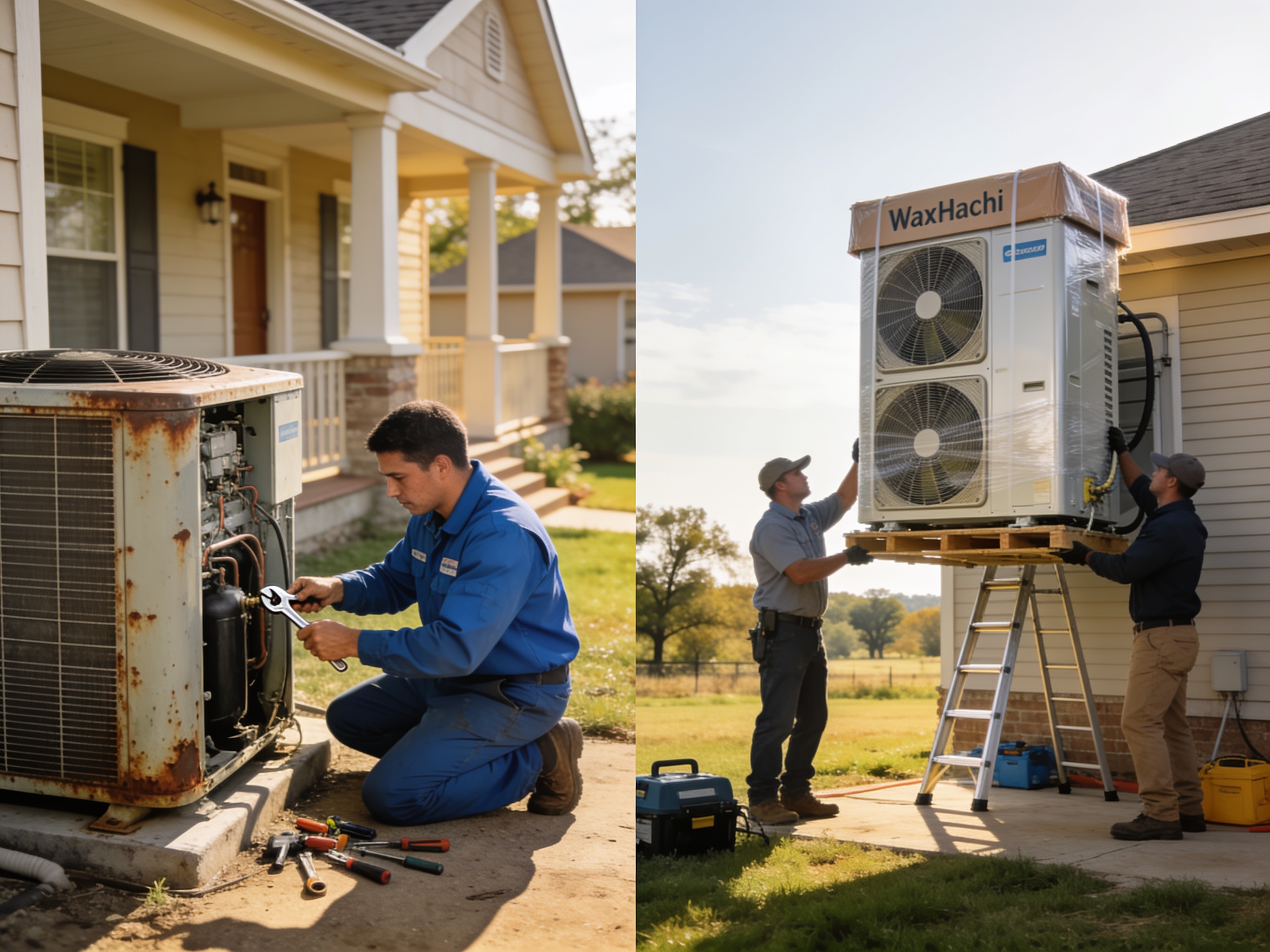
In Waxahachie, the decision to repair or replace your HVAC system typically hinges on its age, the frequency and cost of repairs, and its overall efficiency. Generally, if your system is less than 10 years old and the repair cost is under 30% of a new unit's price, repair is usually the more economical choice. However, for systems older than 10–12 years, especially those requiring frequent fixes or struggling to keep up with our Ellis County summers, replacement often offers better long-term value, improved comfort, and lower energy bills. This is particularly true for homes in areas like Historic Downtown or Northside, where older housing stock might have original, less efficient HVAC units that are simply past their prime.
The Age of Your HVAC System
The lifespan of an HVAC system is a critical factor. Most air conditioners and furnaces are designed to last between 10 and 15 years, with some well-maintained units stretching to 20 years. If your system is approaching or has exceeded the 10-year mark, especially if it's been working hard through countless Waxahachie summers with temperatures often soaring into the high 90s, its components are likely experiencing significant wear and tear. Older systems, particularly those installed before efficiency standards became more stringent, consume more energy. For instance, a 15-year-old unit in a South Waxahachie home might be costing you significantly more in utility bills than a modern, high-efficiency model. When you're constantly calling for Air Conditioning Repair on an aging unit, those costs add up quickly. Consider the initial investment against the ongoing operational expenses and potential for future breakdowns.
Frequency and Cost of Repairs
One of the clearest indicators that replacement might be better than repair is the frequency and expense of breakdowns. If you find yourself scheduling HVAC service calls every season, or if a single repair bill is more than a third of the cost of a new system, it's time to seriously consider an upgrade. For example, replacing a major component like a compressor on an 8-year-old unit might be worthwhile if the rest of the system is sound. However, if that same compressor goes out on a 14-year-old unit, or if multiple components are failing in quick succession, you're likely throwing good money after bad. We often see this dilemma in homes around Getzendaner Park area, where units work overtime to maintain comfort during our hot, humid summers and then face mild but sometimes damp winters, leading to varied stresses on the system. Keeping track of your repair history can provide valuable insight into when to stop patching things up.
Energy Efficiency and Utility Bills
Older HVAC systems are notoriously less energy-efficient than their modern counterparts. As components degrade, they work harder to achieve the same level of heating or cooling, leading to higher energy consumption and inflated utility bills. If you've noticed a significant spike in your electricity or gas bills without a corresponding change in usage habits, your HVAC system could be the culprit. Modern units, particularly those with high SEER (Seasonal Energy Efficiency Ratio) ratings for ACs and AFUE (Annual Fuel Utilization Efficiency) ratings for furnaces, are designed to deliver superior comfort with less energy. Upgrading to a new system can lead to substantial long-term savings on your energy costs, often offsetting a portion of the replacement expense over time. This is especially impactful in Ellis County, where cooling costs can be substantial during our prolonged hot seasons.
Comfort and Performance Issues
Beyond just turning on and off, how well does your HVAC system actually perform? Are there noticeable hot or cold spots in your home? Does the system struggle to maintain your desired temperature during peak demand, such as on a scorching July afternoon or a chilly January morning? These are signs that your system is no longer adequately sized or is simply failing to keep up. In Waxahachie, where spring storms can bring sudden temperature drops after warm days, a reliable system is crucial for consistent comfort. If your unit is constantly running but never quite reaching the thermostat setting, or if it's making unusual noises like grinding or banging, these are strong indicators of underlying problems that may not be easily or cheaply fixed. Sometimes, these issues can be related to ductwork, but often, it points to an aging or undersized unit that needs replacing.
Evaluating the Cost: Repair vs. Replacement
When facing a significant HVAC issue, it's essential to get a clear understanding of both repair and replacement costs. A major repair, such as a compressor replacement, can range from $1,000 to $2,500, depending on the unit and complexity. In contrast, a new HVAC system installation in Waxahachie can range from $4,000 to $12,000 or more, depending on the size, efficiency, and type of system. While the upfront cost of replacement is higher, consider the long-term benefits: improved energy efficiency, enhanced comfort, fewer breakdowns, and peace of mind. For a deeper dive into these figures, you might find our article on Understanding Your HVAC Costs in Ellis County helpful. When we provide an assessment for homes in Waxahachie, Ennis, or Midlothian, we always offer a transparent breakdown of both options so you can make an informed decision that best suits your budget and needs.